Selective mutism in children: the CBPT assessment & treatment protocol
An evidence-based, clinician-facing guide to the symptoms and treatment of selective mutism in children — and to the structured Cognitive Behavioral Play Therapy protocol that helps a non-speaking child gain control over communication.
Train in the CBPT protocol for selective mutismScientific direction: Maria A. Geraci and Susan M. Knell
Five-phase clinical pathway
For child psychotherapists
We build situations where speaking becomes the child’s most rewarding choice.
— Susan M. Knell, Cognitive Behavioral Play Therapy
When the words get stuck
Selective mutism is a childhood anxiety disorder, not shyness or defiance.
A child with selective mutism speaks freely at home yet falls completely silent at school or with unfamiliar people. The capacity for language is intact — anxiety blocks speech in specific settings. For the clinician, the presenting picture is consistent: a child who wants to speak but cannot.
“I want to talk… but the words get stuck.”
Understanding selective mutism
A clinical overview: what selective mutism is, how it presents, when it begins, and the factors that cause and maintain it.
Anxiety disorder (DSM-5-TR)
Consistent failure to speak in specific social situations despite speaking elsewhere
Before age 5 — often first noticed at school entry
Roughly 0.03–1% (DSM-5-TR)
Intact — it is anxiety, not a language deficit
Tends to persist; can impair social and academic development
What is selective mutism? (DSM-5-TR definition)
Selective mutism is an anxiety disorder in which a child consistently cannot speak in certain social settings despite speaking normally in others.
Selective mutism can make it difficult for some children to speak in certain social situations, even though they are perfectly able to do so in other contexts. This behaviour significantly affects school performance, social interaction and emotional well-being. Children with selective mutism speak normally at home or with trusted people and understand spoken language, but withdraw in social contexts such as school or with strangers. It is not simple shyness; it is a deep anxiety that blocks the child’s ability to speak in specific situations. Left untreated, selective mutism persists and causes significant impairment in social and emotional development.

Symptoms & presentation
Selective mutism symptoms present mainly as a persistent inability to speak in specific social situations, despite full speaking capacity elsewhere.
- Completely silent in certain settings (school, public) yet communicates verbally at home with family.
- Resists speaking with people not well known — teachers, classmates, strangers — even when wanting to communicate.
- May express through nonverbal communication: gestures, body language or drawings.
- Anxiety signs: flat or unsmiling expression, lack of eye contact, extreme shyness, tantrums, difficulty with change, sleep problems, irritable or depressed mood.
- Actively avoids social situations in which speaking provokes anxiety.
- Common physical symptoms: stomachaches, headaches, nausea, increased sensory sensitivity.
Selective mutism vs shyness
Selective mutism is not extreme shyness — it is a distinct, anxiety-based disorder that requires clinical attention.
Shyness is a temperamental trait: a child may feel situational discomfort or warm up slowly, yet still speaks when ready. Selective mutism is a persistent, anxiety-driven inability to speak in specific settings — such as school — despite intact language and fluent speech in safe contexts. Recognised in the DSM-5-TR as an anxiety disorder, it does not resolve simply with time or reassurance, and the differential matters: shyness rarely impairs functioning, whereas selective mutism (sometimes termed situational mutism) significantly disrupts a child’s social, emotional and academic development and calls for a structured treatment plan.
Differential diagnosis
Selective mutism is distinguished from other conditions that can also limit a child’s speech.
- Social anxiety disorder: social fear and avoidance are present, but the child can still speak in feared situations; in selective mutism speech itself is consistently blocked in specific settings.
- Autism spectrum disorder: social-communication differences are pervasive across all contexts and accompanied by restricted, repetitive behaviours; in selective mutism social communication is age-appropriate in comfortable settings.
- Developmental language disorder / communication disorder: language or speech ability is itself impaired across settings; in selective mutism language is intact and the silence is anxiety-driven and situation-specific. DSM-5-TR notes the failure to speak should not be better explained by a communication disorder or by lack of knowledge of the spoken language.
Common comorbidities
Selective mutism frequently co-occurs with other anxiety disorders — social anxiety in particular — and may co-occur with ADHD or speech and language difficulties. Because these conditions shape both presentation and treatment, assessment should screen for co-occurring anxiety, attention and communication problems so the clinical formulation and treatment plan address the full picture.
Onset, course & epidemiology
Average onset is between ages 3 and 4, though diagnosis is usually made during school age.
For children with a history of selective mutism, verbal output often remains lower than average, and shyness and social anxiety frequently persist into adolescence and adulthood even when the mutism itself remits.
Causes & maintaining factors
Selective mutism causes are multifactorial — genetic, environmental and social — and the child’s own control over communication is what maintains the silence.
Causes may include genetic, environmental and social factors. Traumatic events or a family environment that limits communication can contribute to the disorder. Because the refusal to communicate is entirely under the child’s control, that very control becomes the central maintaining factor: lasting change is only possible when the child gains control over their communication rather than over their silence. This is why CBPT, a structured, brief, goal-oriented therapy, targets the maintaining mechanism directly — giving the child tools to face fears and anxieties, the opportunity to participate in change, the experience of mastery and control over communication, and more adaptive responses to situations that automatically trigger silence.
The CBPT treatment protocol
A structured, brief and goal-oriented pathway for delivering play therapy for selective mutism: from shared therapeutic goals, through the child’s five-phase work and the parallel parent-training track, to the change clinicians can expect to see.
Therapeutic goals
CBPT is well suited to selective mutism treatment because it hands the child control over communication.
Cognitive Behavioral Play Therapy gives the child:
- the opportunity to participate in change;
- the experience of a sense of mastery;
- control over communication;
- the ability to learn more adaptive responses to situations that might automatically induce silence.
Active participation in treatment is important in a disorder where the refusal to communicate is entirely under the child’s control. Children with selective mutism have control over their silence, so to change they must gain control over their communication.
Working with the child — phase by phase
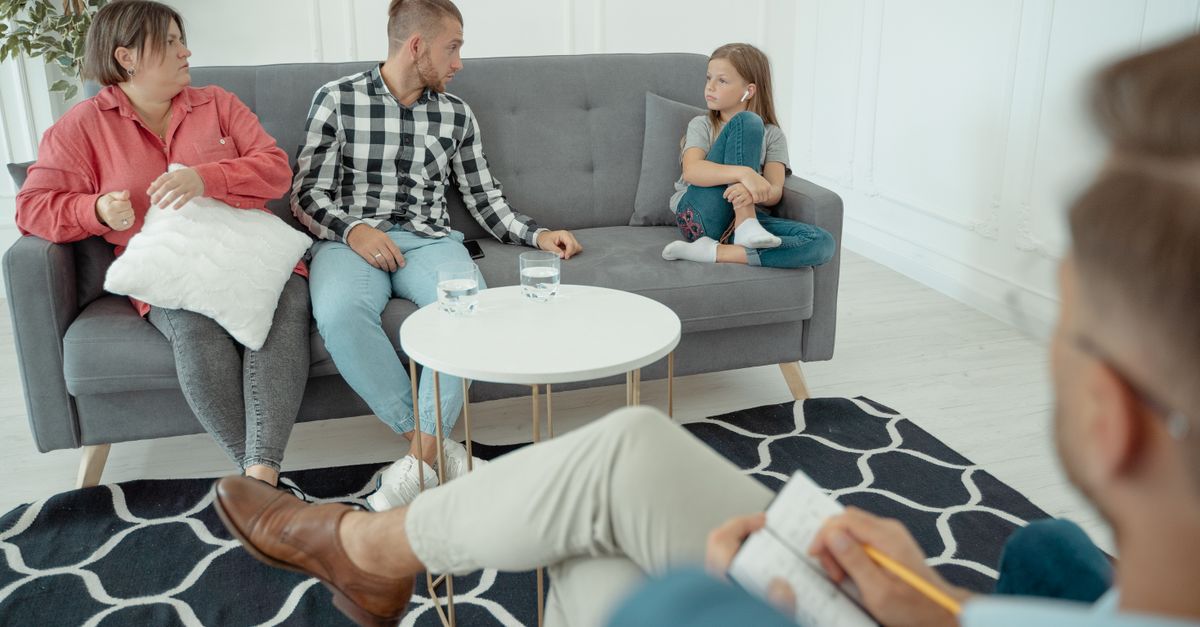
The intervention is organised into five sequential phases, from orientation to follow-up.
Orientation Phase
The initial phase of CBPT, with significant emphasis on preparing both child and parents. An initial meeting between therapist and parents — without the child — reviews history and background, letting parents share their perception of the problem. The therapist helps parents prepare the child for the first session and explains the ongoing role of parents and other significant adults across assessment and treatment. Although the focus is on the child, the therapist continues to interact regularly with parents to provide support and evaluate progress.
Assessment Phase
This phase gathers crucial information to establish shared, goal-oriented therapy targets. Clinical interviews with parents review history, background and their perception of the problem. Beyond parent interviews, structured observation of the child’s play is a key element. Tools include questionnaires administered to parents, assessment of the child’s play, assessment of family play, a sentence-completion task with puppets that lets the child reveal thoughts and feelings indirectly through play, and other measures personalised by the therapist. A baseline for the frequency of the child’s speaking behaviours allows change to be evaluated objectively over treatment. The data gathered here feed directly into case conceptualisation and the structured intervention that follow.
Case Conceptualization Phase
CBPT analyses the data collected during assessment to plan effective treatment and provide a logical framework for developing and achieving goals. It begins by explaining selective mutism and analysing individual, relational and environmental factors related to the parents’ concerns, examining the child’s emotions, thoughts, physical sensations and coping strategies, alongside protective, risk and maintaining factors.
Intervention Phase
This phase uses CBT techniques to help the child develop more adaptive responses to problems, situations and stressors, emphasising adaptive thoughts and behaviours. Methods include modeling, role playing, bibliotherapy, generalization and relapse prevention. Traditional cognitive techniques are adapted through play tools — drawing and expressive arts, therapeutic storytelling, and puppets that face similar situations — with explicit work on generalising learned behaviours to other contexts. Regular parent meetings continue to monitor progress and intervene in parent–child interactions.
Conclusion Phase
Both child and family are actively involved in the final phase. The child faces feelings related to ending therapy while the therapist highlights changes and consolidates learning. Final sessions may be spaced from weekly to biweekly or monthly, helping the child perceive their ability to manage life without the therapist. Positive reinforcement is provided for progress between sessions and the separation is normalised. Follow-ups are scheduled at 3, 6, 12 and 24 months to verify the effectiveness of the intervention.
Learn to deliver every phase in session
Master the five-phase clinical sequence with the child — the play-adapted CBT techniques, the in-session sequencing and the assessment battery — under the scientific direction of Maria A. Geraci and Susan M. Knell.
Get the complete in-session protocolWorking with the family — parent training
While the child follows the five-phase CBPT protocol above, parents follow a parallel five-phase training programme.

A competence-based pathway brings parents into the playroom to shape adaptive behaviours.
Parent Training is a competence-based intervention model that assumes families are capable of managing the problem, that every family has strengths, and that parents can learn new skills. Integrated into CBPT, it brings parents into the playroom to observe and progressively implement interventions that shape adaptive behaviours in the presence of the therapist, aiming to modify relational styles and attitudes that negatively affect children’s behaviour.
Adults help most by treating the silence as anxiety, not defiance. It is important for parents and teachers to understand that selective mutism is an anxiety disorder and not a choice by the child, to be patient and support the child without pressure, and to collaborate with therapists and teachers to create a supportive environment.
Through this approach, parents have the opportunity to:
- Learn new skills.
- Practise specific techniques.
- Receive individualised, ongoing feedback from the therapist to increase their awareness.
- Improve their ability to interpret their children’s emotions, concerns and communication expressed through play.
This program, called PARENT TRAINING CBPT, follows an integrated and innovative approach. Although the primary work is with the child, periodic meetings with parents are essential during both assessment and treatment: this pathway runs parallel to the child’s therapy, emphasising the role parents play in influencing maladaptive behaviours. Parents are encouraged to reinforce adaptive child behaviours so treatment continues outside the therapy setting (using appropriate reinforcement for adaptive behaviours and extinction for maladaptive ones).

The parent-training pathway — five phases
Assessment
The problem is analysed, parenting style is adapted and therapeutic goals are defined. Parents receive information about the causes and consequences of their child’s dysfunctional behaviours and learn to establish clear, consistent rules.
Learning
This phase teaches the new skills needed to support change. Parents learn and practise specific techniques through role-play sessions in which the therapist acts as the child. Key targets include:
- mastery of prerequisites;
- modeling of skills;
- role-playing;
- errorless learning;
- successive approximations (shaping);
- feedback (verbal and social reinforcers, token economy);
- repeated practice.
Practice
Parents carry out play sessions with their own children to apply the skills learned, recognising and preventing situations that trigger difficult behaviours and using consistent problem-solving strategies across contexts. After initial practice with the therapist, parents begin to run individual play sessions under supervision.
Review
Parents discuss at length with the therapist the home play sessions to learn how to generalise what they have learned. Strengths and any problems are reviewed; the therapist helps generalise the interventions and parenting skills acquired. Each week, time is dedicated to applying techniques in everyday life and homework is assigned to practise the strategies.
Conclusion
Reached when therapeutic goals have been met and parents have achieved a satisfactory level of competence in play activities and parenting skills. Therapy is tapered gradually, reducing session frequency to every other week, then monthly, and so on.
Objectives of parent training — specific goals
This program helps parents interact effectively with their child by developing functional behavioural and communicative habits and techniques. It aims to remove conditions that give rise to problem behaviours and replace them with adaptive, socially desirable conduct — preventing dysfunction, promoting well-being and improving crisis conditions.
Understanding behaviour
Increase understanding of the child’s problematic behaviour.
Realistic expectations
Set more realistic expectations.
Warmth & acceptance
Increase warmth, trust and acceptance toward the child.
The value of play
Recognise the importance of interaction through play.
Effective communication
Communicate more effectively with their children.
Parental confidence
Develop greater confidence and reduce frustrations experienced with their children.
Patience
Cultivate greater patience to create more realistic expectations.
Self-understanding
Discuss personal reactions with the therapist to understand their own feelings and behaviours.
Problem solving
Become effective problem solvers of family conflicts and develop stronger motivation for change.
The course includes the full parent-training pathway
Deliver the integrated parent-training track alongside the child’s protocol — the five parent-track phases, the competence-based model and the homework structure that carries change beyond the playroom.
Start the Selective Mutism courseWhat change looks like
As the child gains control over communication, silence is gradually replaced by adaptive responses.

Because the refusal to communicate is entirely under the child’s control, active participation is what makes change possible: as the child gains control over communication, the silence is gradually replaced by new, adaptive responses. With parents supported throughout, progress reaches beyond the therapy room into school and everyday life.
Train in the full assessment-and-treatment protocol for selective mutism.
Train in the CBPT protocol — Selective Mutism courseSelective mutism & CBPT: clinical FAQ
What is the evidence base for CBPT in selective mutism?
Cognitive Behavioral Play Therapy applies empirically supported cognitive-behavioral techniques — modeling, shaping, graded exposure, role play and reinforcement — within a developmentally appropriate play framework, consistent with the DSM-5 conceptualisation of selective mutism as an anxiety disorder. Because the child’s communication is under their own control, the protocol’s mastery-and-control mechanism directly targets the maintaining factor. The CBPT Selective Mutism course details the protocol and its clinical rationale under the scientific direction of Maria A. Geraci and Susan M. Knell.
How does the CBPT protocol structure graded exposure for a non-speaking child?
Exposure is delivered through play and successive approximations (shaping): the child is first reinforced for nonverbal participation, then for sounds, single words and progressively more demanding verbal exchanges, always within a low-pressure setting that preserves a sense of control. Modeling with puppets, therapeutic storytelling and role play let the child rehearse speaking before generalising to school and everyday contexts. The course walks through the in-session sequencing step by step.
Which assessment tools are used before treatment?
The assessment phase combines parent interviews, structured observation of the child’s play, assessment of family play, parent questionnaires and a sentence-completion task with puppets, plus measures personalised by the therapist. A behavioural baseline of speaking frequency is established so change can be tracked objectively across treatment. The training provides the assessment battery and scoring guidance.
How is parent and school collaboration integrated into the protocol?
Parents follow a parallel competence-based training pathway: they learn to reinforce adaptive behaviours, apply extinction to maladaptive ones, and run supervised play sessions, so gains generalise beyond the therapy room. Regular therapist–parent meetings monitor progress and adjust parent–child interactions, while collaboration with teachers extends the consistent, reassuring environment into the school setting.
How is treatment progress measured?
Progress is measured against the behavioural baseline established at assessment — changes in the frequency of speaking and adaptive responses across settings — together with shared, goal-oriented targets agreed with child and family. Structured follow-ups at 3, 6, 12 and 24 months verify maintenance and guide relapse prevention.
What clinical training is required to deliver the CBPT selective-mutism protocol?
Delivering the protocol competently requires structured training in the CBPT model: the five-phase clinical sequence, the play-adapted CBT techniques, the assessment battery and the integrated parent-training pathway. The CBPT Research Center’s Selective Mutism course, under the scientific direction of Maria A. Geraci and Susan M. Knell, provides this clinician-level training with the full in-session protocol.
Is selective mutism on the autism spectrum?
No. Selective mutism is classified in the DSM-5-TR as an anxiety disorder and is distinct from autism spectrum disorder, where social-communication differences are pervasive across all settings and accompanied by restricted, repetitive behaviours. The two can co-occur, so careful differential assessment is essential — in selective mutism communication is age-appropriate in comfortable contexts and the silence is anxiety-driven and situation-specific. The CBPT Selective Mutism course details the assessment battery used to make this distinction.
Can a child outgrow selective mutism without treatment?
It can occasionally improve on its own, but more often it persists and the associated anxiety can carry into adolescence and adulthood, with lasting social and academic impact. Because the silence is maintained by the child’s own control over communication, early evidence-based intervention is associated with better outcomes than a wait-and-see approach. The CBPT protocol targets that maintaining mechanism directly — the course shows how.
At what age can selective mutism be diagnosed?
A diagnosis is usually made from around ages 3 to 5, once the failure to speak has persisted for at least one month and is not limited to the first month of school, per DSM-5-TR criteria. Onset is typically before age 5, though it is often first recognised at school entry when communication demands increase. The course covers diagnostic criteria, baseline measurement and the structured assessment phase.
Train in the full protocol
Master the complete CBPT assessment-and-treatment protocol for selective mutism — five clinical phases, play-adapted CBT techniques and the parent-training pathway.
Enrol in the Selective Mutism courseBibliography
The clinical framework, assessment battery and phase-by-phase protocol described above are grounded in the CBPT literature and in DSM-5 / DSM-5-TR, under the scientific direction of Maria A. Geraci and Susan M. Knell.
- Favaro, A., & Sambataro, F. (2021). Manuale di psichiatria. Piccin.
- Geraci M. A. (2022). La play therapy cognitivo-comportamentale. Armando Editore. Roma
- Geraci M. A. (2023). Comprendere il mondo dei bambini giocando. Armando Editore. Roma
- Geraci M. A. (2024). Il mondo della dottoressa Lulù. Collana Amazon - CBPT Books.
- Knell S. M. (1993). Cognitive Behavioral Play Therapy. J. Aronson
- American Psychiatric Association (2013). Manuale diagnostico e statistico dei disturbi mentali – Quinta edizione. DSM-5. Tr.it.
Specialized CBPT training for Selective Mutism — an evidence-based clinical module under the scientific direction of Maria A. Geraci and Susan M. Knell. For child therapists and clinical psychologists working with anxious and non-speaking children.
Selective Mutism is a complex anxiety disorder that demands careful assessment and a carefully graduated approach. The CBPT clinical module on Selective Mutism provides therapists with a comprehensive framework: from differential diagnosis and family psychoeducation, to the graded exposure techniques within the play therapy setting.
The protocol, developed under the scientific direction of Maria A. Geraci and Susan M. Knell at the CBPT Research Center, is grounded in current evidence and adapted to the developmental needs of children presenting with situational non-speaking.
What you will learn
- Differentiate Selective Mutism from Social Anxiety Disorder and language delays
- Apply CBPT graduated exposure techniques within play-based sessions
- Design parent-training and school-collaboration protocols
- Use CBT-Play tools for psychoeducation with children and caregivers
- Monitor treatment progress with standardized instruments
Why CBPT is effective for Selective Mutism
- ✓ Selective mutism is anxiety-based — CBT addresses the core mechanism (cognitive restructuring + behavioral exposure)
- ✓ Knell, S. M. (1993a) — To show and not tell: CBPT in the treatment of Elective Mutism (foundational case study)
- ✓ Play modality lowers performance pressure on children who struggle to verbalize
- ✓ Structured 5-phase intervention with parent training (parents play a key role in graduated exposure)
- ✓ Compatible with school-based extension and parent-implemented homework
STRUCTURED CBPT PROTOCOL FOR SELECTIVE MUTISM
A comprehensive online course on assessing, planning and treating selective mutism with Cognitive Behavioral Play Therapy.
Access the Selective Mutism Course →
CBPT Research Center — where Susan M. Knell, pioneer of CBPT, provides scientific direction. Training trusted by clinical centers worldwide.
CBPT Research Center — Training Programme
Professional Training in CBPT for Selective Mutism
The CBPT Research Center develops and delivers evidence-based postgraduate training for psychologists, psychotherapists and clinical specialists. Our certified curriculum includes a dedicated module on the CBPT approach to Selective Mutism, grounded in peer-reviewed research and clinical practice.
View the training curriculumBuild the skill — go further with CBPT
Skills you can use in session, self-paced — under the scientific direction of Susan M. Knell, originator of CBPT.