
Play therapy
The strategic use of play within therapeutic contexts to promote the expression and processing of a child's thoughts, needs and feelings.
Play as a therapeutic paradigm
Play therapy is the strategic use of play within therapeutic contexts to support the expression and processing of the child's thoughts, needs and feelings. Play has long been recognized as a means of communication, a route to understanding the child and a foundation for the therapeutic relationship.
As a paradigm, play therapy has developed across different theoretical orientations that share similarities yet differ in approach — most notably Directive Play Therapy and Non-Directive Play Therapy. Cognitive Behavioral Play Therapy (CBPT) is situated among the directive approaches.
Two orientations
Directive — play is used to build a strong therapist–child bond while guiding actions toward defined goals.
Non-directive — an effective, non-intrusive therapy that values the child as they are, without external demands.
Where CBPT comes from
Historically, play therapy has been grounded in either psychodynamic or client-centered theories, such as Child-Centered Play Therapy (Axline, 1947). CBPT differs from these more traditional forms, while sharing their reliance on a positive therapeutic relationship, the use of play as a means of communication between therapist and child, and the experience of therapy as a safe place.
Knell (2009) describes the most salient similarities and differences between directive and non-directive play therapy, grouping them into five areas: direction and objectives of therapy, play materials and activities, the educational value of play, interpretation of the child's play, and the role of praise.
What distinguishes CBPT
Across the five areas described by Knell (2009), CBPT takes a distinctive directive stance:
In CBPT (directive)
- Therapeutic goals are defined; intervention directs actions toward them.
- Child and therapist together choose play materials and activities.
- Play teaches alternative, more adaptive skills and behaviors.
- The therapist interprets play, helping the child discuss conflicts.
- Praise is a crucial component, reinforcing appropriate behaviors.
In non-directive play therapy
- The child is valued as they are, without external demands or directions.
- The child selects materials and decides how to play.
- Education is seen as unsuitable, as a form of direction.
- The therapist does not interpret play, but communicates full acceptance.
- Praise is avoided, to prevent implying a need for change.
What the research supports
Research on play therapy broadly supports its effectiveness across a wide range of social, emotional, behavioral and learning problems — including post-traumatic stress, conduct disorder, depression, attention deficit and hyperactivity, disruptive behaviors, aggression, anxiety and fear, impulsivity, low self-esteem, reading difficulty and social withdrawal.
The literature also supports its cross-cultural effectiveness and beneficial outcomes with diverse populations, including children facing chronic illness, grief and loss, abuse, domestic violence, adoption disruptions, attachment difficulties, natural disasters, and stressors such as divorce and relocation.
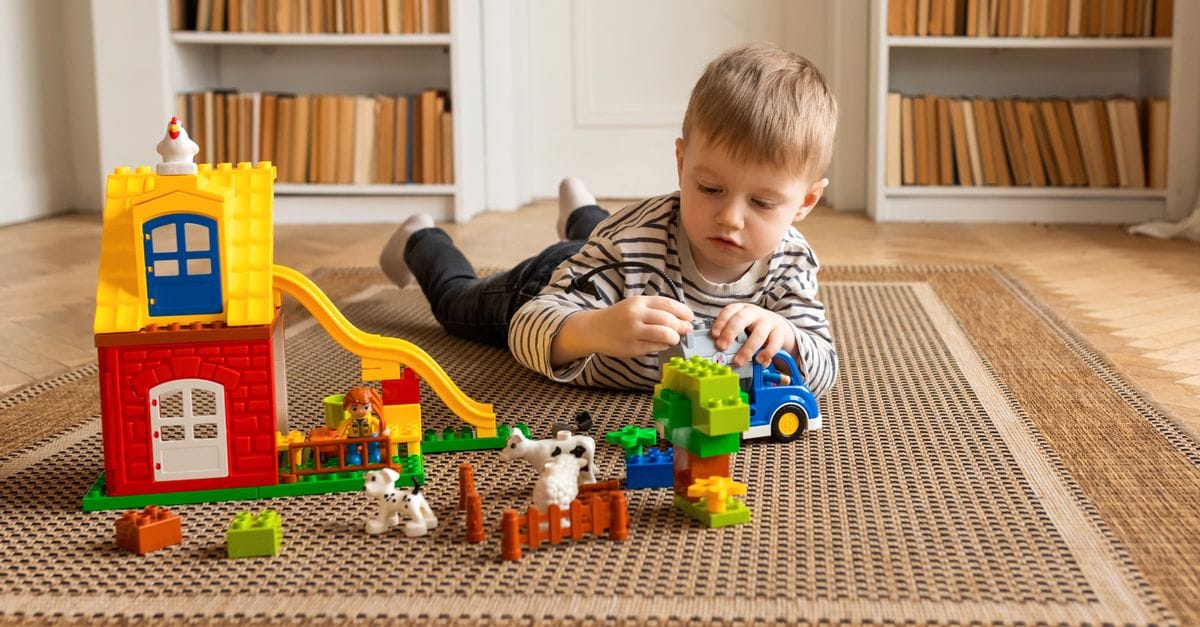
Bratton & Ray, 2000; Drewes, 2006; Ray & Bratton, 2010; Reddy et al., 2005; LeBlanc & Ritchie, 2001.
In CBPT we define therapeutic goals, and the foundation of intervention is directing actions toward them.
Train in Cognitive Behavioral Play Therapy
Go deeper into the method, its tools and its clinical application with the dedicated CBPT training.
Explore the CBPT courses