ADHD in children: the CBPT assessment & treatment approach
A practitioner’s guide to recognising attention-deficit/hyperactivity disorder in childhood and supporting self-regulation through Cognitive Behavioral Play Therapy, within a multimodal plan — under the scientific direction of Maria A. Geraci and Susan M. Knell.
Train in the CBPT approach for childhood ADHDScientific direction: Maria A. Geraci and Susan M. Knell
Five-phase clinical pathway
For child psychotherapists
A child with ADHD is not unwilling — they are working harder than anyone to hold attention together. Play builds the skills that effort alone can’t.
— CBPT Research Center
When attention and impulse won’t hold still
ADHD is more than restlessness — not defiance, but differences in attention and inhibitory control.
Children may lose track of instructions, abandon tasks, interrupt, act before thinking and struggle to wait — not from defiance but from differences in attention and inhibitory control. The daily accumulation of correction erodes self-esteem and strains relationships at home and school.
“I want to finish — my brain just keeps jumping to the next thing.”
Understanding ADHD in children
A clinical overview: what attention-deficit/hyperactivity disorder is, how its symptoms present, when it begins, and the factors that cause and maintain it.
Neurodevelopmental disorder (DSM-5-TR)
Persistent pattern of inattention and/or hyperactivity-impulsivity interfering with functioning or development
Early development; several symptoms present before age 12, across ≥2 settings
Predominantly inattentive, predominantly hyperactive-impulsive, or combined
≥6 symptoms in a domain required for children
Course variable; often persists into adolescence and adulthood, impairing school, social and family functioning
What is ADHD? (DSM-5-TR definition)
ADHD is defined as a persistent pattern of inattention and/or hyperactivity-impulsivity that interferes with functioning or development.
According to DSM-5-TR (APA, 2022), attention-deficit/hyperactivity disorder is a neurodevelopmental condition characterised by a persistent pattern of inattention and/or hyperactivity-impulsivity that interferes with functioning or development. Several symptoms must be present before age 12, manifest in two or more settings (e.g., home and school), and have been present for at least six months. Three presentations are recognised: predominantly inattentive, predominantly hyperactive-impulsive, and combined. For children, at least six symptoms in the relevant domain must be present to meet diagnostic threshold. The disorder is one of the most common neurodevelopmental conditions of childhood, and its course is variable — symptoms frequently persist into adolescence and adulthood, though their expression may change over time.
Symptoms & presentation: inattention and hyperactivity-impulsivity
ADHD symptoms present as inattention and/or hyperactivity-impulsivity that are persistent and impairing across settings.
Inattention symptoms include careless errors in schoolwork or other activities, difficulty sustaining attention during tasks or play, not listening when spoken to directly, failure to follow through on instructions, disorganisation, avoidance of tasks requiring sustained mental effort, losing things necessary for tasks, distractibility by extraneous stimuli, and forgetfulness in daily activities. Hyperactivity-impulsivity symptoms include fidgeting, leaving seat in situations where remaining seated is expected, running or climbing inappropriately, being unable to engage in leisure activities quietly, acting as if “driven by a motor”, talking excessively, blurting out answers, difficulty waiting for a turn, and interrupting or intruding on others.
- Careless errors and difficulty sustaining attention
- Disorganisation and forgetfulness
- Fidgeting and leaving seat unexpectedly
- Excessive talking and blurting out answers
- Difficulty waiting and interrupting others
- Acting impulsively before thinking
ADHD vs age-typical activity
Clinically significant ADHD is distinguished from the developmentally normal energy and distractibility typical of childhood.
Young children are naturally energetic, distractible and impulsive; the question clinicians must answer is whether the observed behaviours are pervasive, persistent and impairing across settings, or whether they are situational and in keeping with the child’s developmental stage. Developmentally normal activity and inattentiveness tend to be context-bound — appearing in unstructured, low-interest situations but not impairing broader functioning. ADHD, by contrast, is persistent across home, school and social settings, present for at least six months, and causes clinically significant impairment. Recognising this distinction is essential both for accurate identification and for avoiding over-pathologising normal developmental behaviour.
Differential diagnosis
ADHD in children is distinguished from other conditions that share overlapping features.
- Anxiety disorders: anxiety can produce difficulties with concentration and restlessness; differential rests on whether attention difficulties are driven primarily by worry rather than by a pervasive trait-level pattern.
- Specific learning disorders: learning difficulties can cause classroom inattentiveness and avoidance that mimic ADHD; a thorough assessment distinguishes primary learning disorder from ADHD, or identifies co-occurrence.
- Oppositional defiant disorder (ODD): ODD involves a pattern of defiant and hostile behaviour toward authority figures; it frequently co-occurs with ADHD and both diagnoses may be warranted.
- Sleep problems, hearing and vision issues, trauma: each can mimic or exacerbate inattention and hyperactivity and should be assessed as part of a comprehensive evaluation.
Common comorbidities
ADHD in childhood frequently co-occurs with oppositional defiant disorder, anxiety disorders, mood difficulties and specific learning disorders. Because comorbidities shape both presentation and treatment planning, a thorough assessment should screen for co-occurring conditions so that the clinical formulation and care plan address the full picture.
Onset, course & epidemiology
ADHD is among the most common neurodevelopmental disorders of childhood, with onset in early development and a course that is variable across the lifespan.
ADHD is one of the most prevalent neurodevelopmental conditions of childhood. Onset occurs in early development, with several symptoms required to be present before age 12. The course is variable: some children show a reduction in hyperactive-impulsive symptoms over time, while inattentive symptoms and functional impairments can persist into adolescence and adulthood. Early identification is important, as the accumulating burden of academic difficulties, peer conflicts and parental friction can compound functional impairment and erode self-esteem if not addressed with appropriate support.
Causes & maintaining factors (CBPT conceptualization)
ADHD causes are strongly neurobiological and heritable; environment and contingencies shape function and self-concept over time.
ADHD has a strong neurobiological and genetic basis. Heritability is well established in the research literature, and neurobiological differences in frontostriatal circuitry underlie the core regulation difficulties. Environmental factors — including early adversity, prenatal exposures and inconsistent contingency management — do not cause ADHD but can shape its expression and the child’s developing self-concept. A critical maintaining factor is the cumulative experience of failure, correction and frustration that, over time, erodes self-esteem and motivation.
In the CBPT conceptualization, CBPT does not “cure” ADHD — the underlying neurodevelopmental profile remains — but it builds self-regulation, planning and emotion-coping skills through play. CBPT is delivered as part of a multimodal plan that may include behavioural intervention, educational accommodations and, where clinically indicated, medication. The play-based framework allows clinicians to work within the child’s developmental capacities, building skills incrementally in an engaging, low-stigma context.
The CBPT treatment approach for ADHD
A structured, brief and goal-oriented pathway for supporting self-regulation in children with ADHD through play: from shared therapeutic goals, through the child’s five-phase work on attention and impulse control, to the parallel parent-training track and the change clinicians can expect to see.
Therapeutic goals
CBPT is well suited to supporting children with ADHD because it builds regulation skills through developmentally calibrated play.
In CBPT, goal-setting is shared with the child and family. The aim is to teach skills that help the child understand, think about, interpret and respond effectively to events — building the self-regulation, planning and emotion-coping capacities that ADHD can undermine. In the context of ADHD, the protocol generally pursues:
- developing self-monitoring and self-regulation capacities;
- direct teaching of attention-management and impulse-control techniques;
- developing planning and problem-solving skills;
- psychoeducation for both parents and child.
Crucially, both parents and child should start from the awareness that the child is not responsible for the disorder, that symptoms are separate from who the child is, and that all stakeholders — parents, teachers and therapists — share responsibility for addressing the current struggles. CBPT is delivered within a multimodal care plan and complements, rather than replaces, behavioural and educational interventions.
Working with the child — phase by phase
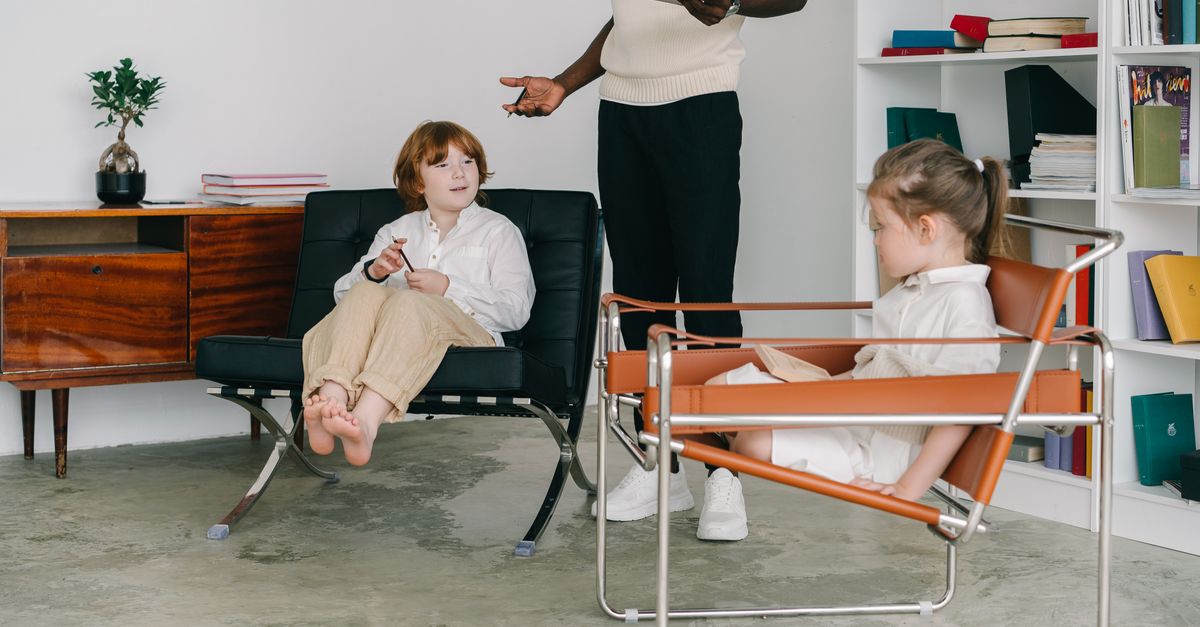
The intervention is organised into five sequential phases, from orientation to follow-up.
Orientation Phase
The initial phase of CBPT places significant emphasis on preparing both the child and the parents. An initial meeting between therapist and parents — without the child — reviews the child’s history and background in detail and lets parents share their perception of the problem. The therapist helps parents prepare the child for the first session and explains the ongoing role of parents and other significant adults across assessment and treatment. For ADHD, this phase establishes a strengths-based, blame-free frame and begins the process of externalising “the wiggles” or “the jumps” — separating the child’s identity from the symptom. Although attention is focused on the child, the therapist continues to interact regularly with parents to offer support and evaluate progress toward therapeutic goals.
Assessment Phase
This phase collects the information needed to establish shared, goal-oriented therapy targets. Beyond interviews with parents, structured observation of the child’s play is a key element. Tools include questionnaires administered to parents, assessment of the child’s play, assessment of family play, a puppet sentence-completion task that lets the child reveal thoughts and feelings indirectly, and other measures personalised by the therapist. For ADHD, the assessment specifically observes attention, impulse control and frustration tolerance in play, gathers multi-setting input from parents and teachers, and establishes a baseline of target behaviours to measure change objectively throughout treatment.
Case Conceptualization Phase
CBPT analyses the data gathered during assessment to plan effective treatment and provide a logical structure for developing and achieving goals. It begins by explaining ADHD and analysing individual, relational and environmental factors related to the parents’ concerns, examining the child’s emotions, thoughts, physical sensations and coping strategies, alongside the protective, risk and maintaining factors that shape the child’s regulation difficulties. For ADHD, the conceptualisation identifies the child’s specific regulation gaps and the environmental contingencies that maintain challenging behaviours, enabling a tailored plan that addresses both the child’s profile and the family system.
Intervention Phase
This phase uses CBT techniques to help the child with ADHD develop more adaptive responses to problems, situations and stressors, emphasising adaptive thoughts and behaviours. Core techniques include self-monitoring, stop-think-act sequences, turn-taking and planning games, emotion regulation strategies and reinforcement — all woven into play. Methods include modeling, role-playing, bibliotherapy, generalization and relapse prevention; traditional cognitive techniques are adapted through play tools such as drawing and expressive arts, therapeutic storytelling and puppets that navigate similar challenges, with explicit work on generalising learned behaviours to home and school contexts. Regular parent meetings continue to monitor progress and intervene in parent–child interactions.
Conclusion Phase
Both child and family are actively involved in the final phase. The child addresses feelings related to ending therapy while the therapist highlights the changes achieved and consolidates learning. Final sessions may be spaced from weekly to biweekly or monthly, helping the child perceive their ability to manage life without the therapist. For ADHD, this phase consolidates routines, generalises skills to home and school settings, and supports relapse-prevention so the gains extend beyond the therapy room. Positive reinforcement is provided for progress between sessions and the separation is normalised. Follow-ups are scheduled at 3, 6, 12 and 24 months to verify the effectiveness of the intervention.
Learn to deliver every phase in session
Master the five-phase clinical sequence with the child — the play-adapted CBT techniques, self-regulation skill-building, the in-session sequencing and the assessment battery — under the scientific direction of Maria A. Geraci and Susan M. Knell.
Get the complete in-session protocolWorking with the family — parent training
While the child follows the five-phase CBPT protocol, parents follow a parallel five-phase training programme.

A competence-based pathway brings parents into the playroom to shape adaptive behaviours.
Parent Training is a competence-based intervention model that assumes families are capable of managing the problem, that every family has strengths, and that parents can learn new skills. Integrated into CBPT, it brings parents into the playroom to observe and progressively implement interventions that shape adaptive behaviours in the presence of the therapist, aiming to modify relational styles and attitudes that negatively affect children’s behaviour.
Parents are taught to understand the factors contributing to the child’s symptoms, the cues and events that trigger mood changes, and behaviour-management strategies that enhance self-esteem rather than shame the child — alongside the principles of a collaborative problem-solving approach (Greene) that respects both the parent’s and the child’s point of view.
Through this approach, parents have the opportunity to:
- Learn new skills.
- Acquire and practise specific techniques.
- Receive individualised, ongoing feedback from the therapist to increase their awareness.
- Interpret more accurately their children’s emotions, concerns and communication expressed through play.
This program, called PARENT TRAINING CBPT, follows an integrated and innovative approach. Although the primary work is with the child, periodic meetings with parents are essential during both assessment and treatment: this pathway runs parallel to the child’s therapy, emphasising the role parents play in influencing maladaptive behaviours. Consistent structure, reinforcement and accommodations are central to supporting children with ADHD across home and school settings. Parents are encouraged to reinforce adaptive child behaviours so treatment continues outside the therapy setting (using appropriate reinforcement for adaptive behaviours and extinction for maladaptive ones).

The parent-training pathway — five phases
Assessment
The problem is analysed, parenting style is adapted and therapeutic goals are defined. Parents receive information about the causes and consequences of their child’s dysfunctional behaviours and learn to establish clear, consistent rules.
Learning
This phase teaches the new skills needed to support change. Parents learn and practise specific techniques through role-play sessions in which the therapist acts as the child. Key targets include:
- mastery of prerequisites;
- modeling of skills;
- role-playing;
- errorless learning;
- successive approximations (shaping);
- feedback (verbal and social reinforcers, token economy);
- repeated practice.
Practice
Parents carry out play sessions with their own children to apply the skills learned, recognising and preventing situations that trigger difficult behaviours and using consistent problem-solving strategies across contexts. After initial practice with the therapist, parents begin to run individual play sessions under supervision.
Review
Parents discuss at length with the therapist the home play sessions to learn how to generalise what they have learned. Strengths and any problems are reviewed; the therapist helps generalise the interventions and parenting skills acquired. Each week, time is dedicated to applying techniques in everyday life and homework is assigned to practise the strategies.
Conclusion
Reached when therapeutic goals have been met and parents have achieved a satisfactory level of competence in play activities and parenting skills. Therapy is tapered gradually, reducing session frequency to every other week, then monthly, and so on.
Objectives of parent training — specific goals
This program helps parents interact effectively with their child by developing functional behavioural and communicative habits and techniques, removing the conditions that give rise to problem behaviours and replacing them with adaptive, socially desirable conduct.
Understanding behaviour
Increase understanding of the child’s problematic behaviour.
Realistic expectations
Set more realistic expectations.
Warmth & acceptance
Increase warmth, trust and acceptance toward the child.
The value of play
Recognise the importance of interaction through play.
Effective communication
Communicate more effectively with their children.
Parental confidence
Develop greater confidence and reduce frustrations experienced with their children.
Patience
Cultivate greater patience to create more realistic expectations.
Self-understanding
Discuss personal reactions with the therapist to understand their own feelings and behaviours.
Problem solving
Become effective problem solvers of family conflicts and develop stronger motivation for change.
The course includes the full parent-training pathway
Deliver the integrated parent-training track alongside the child’s protocol — the five parent-track phases, the competence-based model and the structured approach that carries change beyond the playroom.
Train in the CBPT method — Basic Theoretical ModelWhat change looks like
As self-regulation, planning and emotion-coping skills grow, the daily burden of ADHD on the child and family eases.

Through structured, play-based skill-building, the child learns to monitor attention, tolerate frustration and plan before acting. Self-esteem improves as the experience of competence replaces the cycle of correction. As emotion-regulation and problem-solving skills grow — and with parents supported throughout — progress reaches beyond the therapy room into school and everyday life, coordinated with the wider multimodal care plan, with follow-ups confirming that the gains hold.
Train in the full assessment-and-treatment approach for ADHD in children.
Train in the CBPT approach — Basic Theoretical Model courseADHD & CBPT: clinical FAQ
Does CBPT replace medication or behavioural parent training for ADHD?
No. CBPT complements multimodal, evidence-based care for ADHD — it does not replace medication, behavioural parent training or educational accommodations. Rather, it adds skill-building and emotional support through play, working within the child’s developmental capacities to build self-regulation, frustration tolerance and planning in a low-stigma, engaging context. The CBPT approach is coordinated with the wider care plan under the scientific direction of Maria A. Geraci and Susan M. Knell.
What can play-based work realistically change in a child with ADHD?
Play-based CBPT work can support the development of self-regulation, frustration tolerance, planning, social skills and self-esteem. It does not alter the underlying neurodevelopmental trait — the profile of ADHD itself — but it builds skills and a positive self-concept that help the child function more effectively across settings. The CBPT course details the specific techniques and in-session sequencing for each of these targets.
How is the inattentive presentation engaged in play therapy?
The predominantly inattentive presentation is engaged through structured, motivating play that scaffolds sustained attention and self-monitoring. Rather than relying on verbal instruction alone, the therapist uses play activities designed to incrementally extend the child’s attention window, build self-monitoring habits and provide immediate reinforcement for on-task behaviour. The session structure itself — with clear review, goal-setting, new content and practice — models the kind of routine that supports attention in daily life.
What is the role of family and school in the CBPT approach for ADHD?
Consistent structure, reinforcement and accommodations are central to supporting children with ADHD. Parent training is an integral part of the CBPT protocol: parents follow a parallel five-phase pathway in which they learn to recognise triggers, apply consistent reinforcement strategies and generalise skills to everyday settings. Liaison with school, where appropriate, ensures that accommodations and behavioural strategies are coordinated across contexts.
How long is CBPT treatment for ADHD?
Treatment is typically organised across roughly 16 weeks, individualised to the child’s profile and coordinated with the wider multimodal care plan. Sessions follow a consistent structure — review, goal-setting, new content, practice and homework — that itself models the routines helpful for children with ADHD. Follow-ups are scheduled at 3, 6, 12 and 24 months to confirm that gains are maintained. The CBPT course provides the full session-by-session protocol under the scientific direction of Maria A. Geraci and Susan M. Knell.
Train in the full protocol
Master the complete CBPT assessment-and-treatment approach for childhood ADHD — five clinical phases, play-based self-regulation skill-building, and the parent-training pathway.
Enrol in the CBPT Basic Theoretical Model courseBibliography
The clinical framework, assessment battery and phase-by-phase protocol described above are grounded in the CBPT literature and in DSM-5 / DSM-5-TR, under the scientific direction of Maria A. Geraci and Susan M. Knell.
- American Psychiatric Association (2022). Diagnostic and Statistical Manual of Mental Disorders, Fifth Edition, Text Revision (DSM-5-TR).
- Geraci, M. A. (2022). La play therapy cognitivo-comportamentale. Armando Editore. Roma
- Geraci, M. A. (2023). Comprendere il mondo dei bambini giocando. Armando Editore. Roma
- Geraci, M. A. (2024). Il mondo della dottoressa Lulù. Collana Amazon - CBPT Books.
- Greene, R. W. (2014). The Explosive Child (collaborative problem-solving approach).
- Knell, S. M. (1993). Cognitive Behavioral Play Therapy. J. Aronson.
CBPT Research Center — Training Programme
Professional Training in CBPT for ADHD
The CBPT Research Center develops and delivers evidence-based postgraduate training for psychologists, psychotherapists and clinical specialists. Our certified curriculum includes a dedicated module on the CBPT approach to ADHD, grounded in peer-reviewed research and clinical practice.
View the training curriculumThe in-session protocol
Skills you can apply in session — under the scientific direction of Susan M. Knell, originator of CBPT.