CBPT Tools: Use of Puppets in Clinical Practice — by Maria A. Geraci
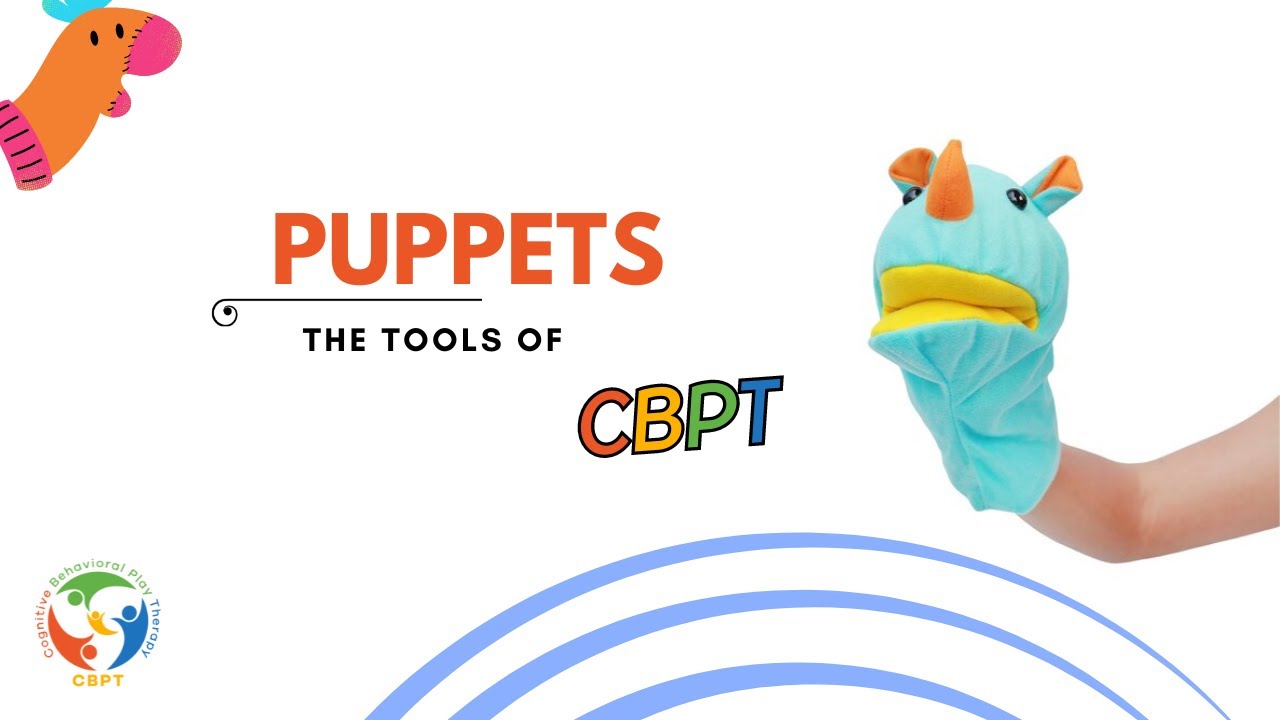
Puppets create an atmosphere of free expression that absorbs the child: they let the child be spontaneous, identify with the characters and project feelings and interpersonal conflicts — becoming both an assessment and an intervention tool in CBPT.
What you will be able to do
The puppet the child picks up is already telling you something. A turtle means something different from a dragon — and reading that choice is the first clinical act. This course gives you the full system: how to use puppet selection as assessment data, how to administer the Puppet Sentence Completion Task (PSCT), and how to deliver every CBPT cognitive-behavioral technique through puppets — precisely rather than intuitively.
Turn a tool you already use into a precise clinical instrument.
About this course
Puppets are a versatile and powerful clinical tool in play therapy. They provide children with a safe distance to explore and express difficult thoughts and feelings, and can be used to model coping strategies, practice social skills, and work through anxiety.
This course demonstrates the evidence-based therapeutic rationale for puppet use within CBPT and provides practical guidance on selecting puppets, structuring puppet-based sessions, and integrating puppet techniques with cognitive and behavioral CBPT strategies.
Course objectives
- Use puppets as an evidence-based clinical tool in CBPT sessions
- Adapt puppet play techniques to different clinical presentations and age groups
- Integrate puppet techniques with CBPT cognitive and behavioral strategies
- Plan puppet-based sessions aligned with the case conceptualization
Course requirements
- Psychiatrists
- Psychologists
- Clinical Social Workers
- Licensed Professional Counselors
- Licensed Marriage and Family Therapists
- Licensed Mental Health Clinical Nurse Practitioners
The delivery of the certificate of attestation at the conclusion of the course will be tied to the evaluation of participants' requirements. In the absence of the requirements, the course hours will not be certified.
Curriculum · 9 lessons + Learning Test · 2h 54min
Instructor

Frequently asked questions
Why are puppets used as a clinical tool in play therapy?
Puppets give children a safe distance to explore and express difficult thoughts and feelings, and can be used to model coping strategies, practice social skills, and work through anxiety.
What will I learn in this course?
You will learn the evidence-based therapeutic rationale for using puppets in CBPT, along with practical techniques for modeling coping strategies and facilitating emotional expression through this tool.
Who is this course for?
Child psychologists, psychotherapists and mental health professionals who want to add puppets as a structured clinical tool within a CBPT framework.
Who teaches this course and how long does it take?
The course is taught by Maria A. Geraci, CBPT Tools Specialist at the CBPT Research Center. It includes 9 lessons plus a learning test, for a total of about 2 hours and 54 minutes, and is self-paced online with a certificate of completion.
Who this course is for
Psychologists and psychotherapists · Psychiatrists · Clinical and licensed independent social workers · Licensed professional counselors · Marriage and family therapists · Mental health clinical nurse practitioners.
A certificate of attendance is issued on completion, tied to the final learning test.